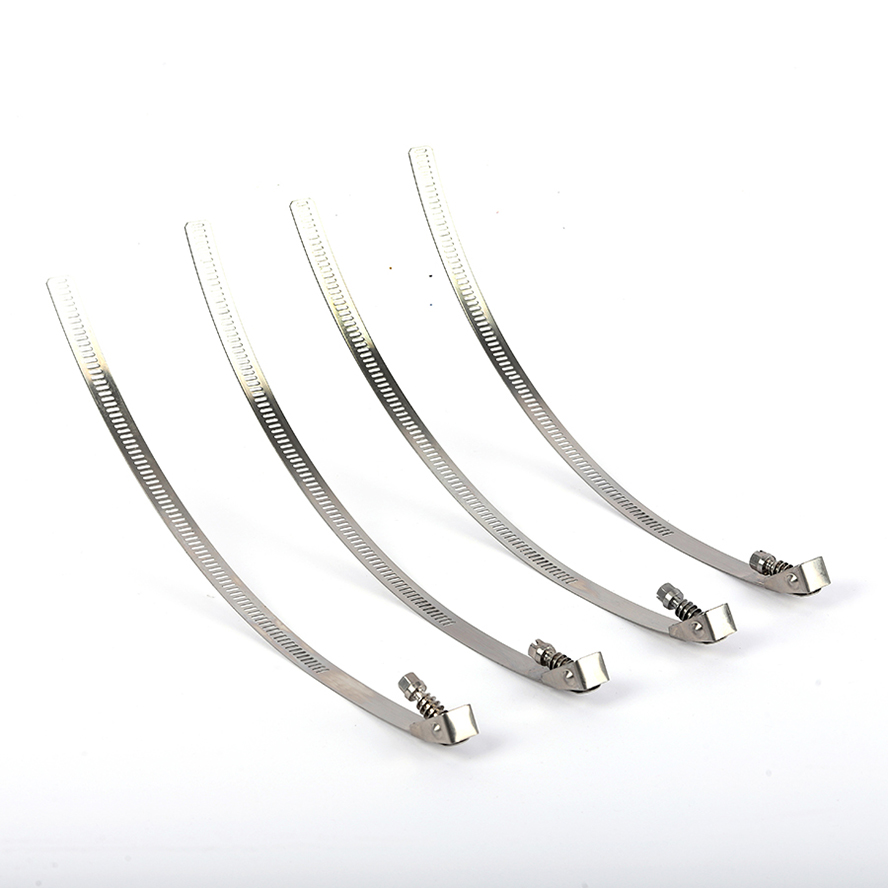
How to connect stainless steel clamps! Clamps have become the preferred technology for connecting liquid and gas pipelines. Although this technology was developed later in China than abroad, it was quickly accepted by the domestic market due to its advanced technology. . From the beginning of research and development in 1998 to now, after just a few years of development and application, it has gradually replaced the two traditional pipeline connection methods of flange and welding. Not only is it technically more mature, it is also generally recognized by the market, and it has been actively guided by national regulations and policies. Clamping process:
1. Use a pipe cutting machine to cut the steel pipe to the required length, and use a level to check the cut section to ensure that the cut section is perpendicular to the central axis of the steel pipe. If there are burrs in the cut, use a grinder to smooth it.
2. Clamp the steel pipe that needs to be grooved on the rolling groove machine and the tailstock of the rolling groove machine, and use a level to level it so that the steel pipe is in a horizontal position.
3. The clamp holds the processed end section of the steel pipe close to the rolling groove machine, so that the central axis of the steel pipe is perpendicular to the roller surface.
4. Press down slowly. Jack to make the upper pressure wheel close to the steel pipe, start the rolling groove machine and make the roller rotate once. At this time, pay attention to whether the steel pipe section is still close to the rolling groove machine. If not, adjust the pipe to the level. If it is tight, slowly press down the jack so that the upper pressure wheel evenly rolls the steel pipe to the predetermined groove depth.
5. When the clamp is stopped, use a vernier caliper to check the depth and width of the groove. After confirming that it meets the standard requirements, unload the jack and take out the steel pipe. During the application process of the clamp, precautions must be taken, and attention must be paid to maintenance after use to extend its life.
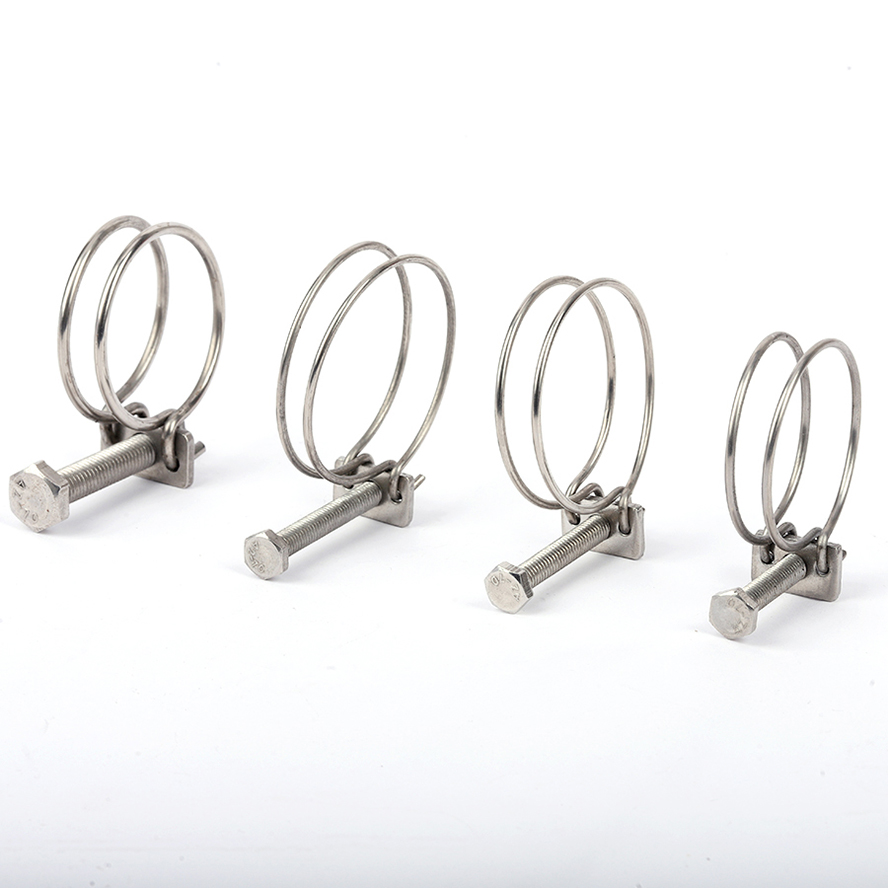
The double-ring clamp solves the inconvenient problem of fixing and clamping existing side-by-side parallel pipes in a small space. This double-ring clamp includes a body composed of two symmetrically arranged mounting pieces with openings at both ends of the body. The middle portions of the two mounting pieces are connected through fixing pieces and the fixing pieces separate the body into two symmetrically arranged annular bodies. Both upper openings have a first engaging portion and a second engaging portion extending outward. The first engaging portion and the second engaging portion on the same side are both passed through by bolts and fixed by nuts. Between the two openings on the body Limiting parts are set between them, and the limiting parts are set on the bolts and screws.